
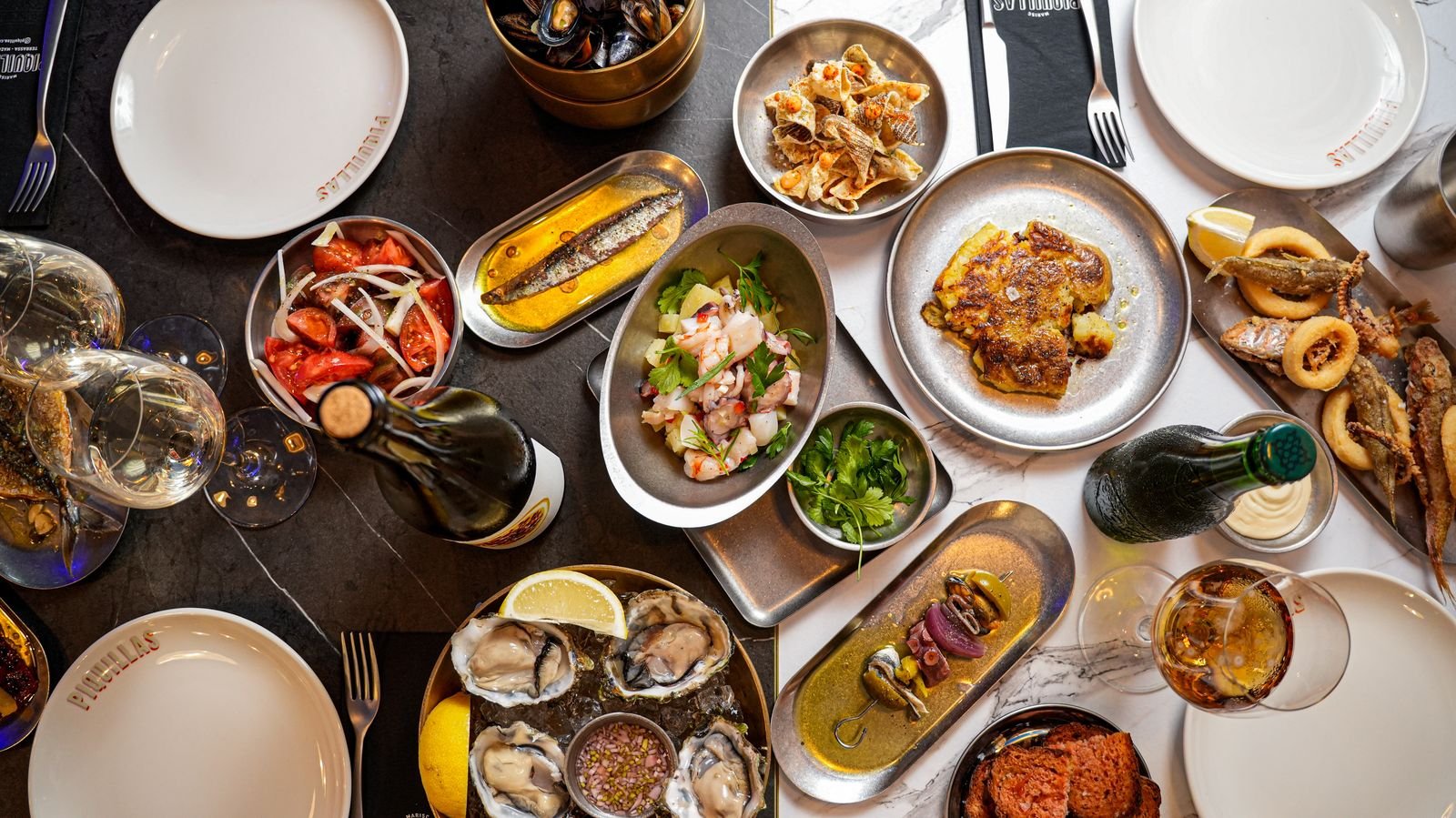
In short: Restaurant marketing is everything that gets someone who's hungry and has no plan to end up sitting at one of your tables: your Google listing, the adverts, Instagram, the website and what people say about you. It isn't measured in likes; it's measured in bookings, calls and people asking how to get there. Across 40 restaurants we manage, over thirteen weeks of summer 2026, each of those actions cost a median of €0.48 in Google Ads, and 87% of them were directions requests. What really changes a restaurant isn't spending more: it's knowing which services are empty, putting the money there and looking only at the figures that matter. This guide explains where to start, what you can do for free in month one, what it costs when you do pay and how to measure it without fooling yourself (or letting anyone else fool you).
There's a moment, nearly always a Tuesday at quarter past nine, when you look out at the dining room and the sums do themselves: so many tables, so many wages, so many chairs doing an impression of chairs. And there's another moment, Saturday at the very same hour, when you can't keep up, the bread runs out and you swear blind that the restaurant is doing wonderfully. They're the same restaurant (and the same kitchen, even if on Saturday it seems like there are three of them). Restaurant marketing is about the difference between those two moments: filling Tuesday without giving Saturday away. The rest (the new logo, the followers, the reel with that song that's playing everywhere) is all very nice, but it doesn't pay the kitchen's wages.
This is the long guide, with a chair for everyone: written from an agency that only works with restaurants, with figures from our own accounts and just enough theory, because theory doesn't fill tables. If you're in a hurry, skip to what to do for free in month one. If you've got a restaurant and a Tuesday, read on.
What restaurant marketing is (and what it isn't)
Restaurant marketing is getting someone who's hungry and has no plan to choose you, and to come back. That's it. The rest is literature. Anything that helps with that counts: your Google listing telling the truth about your opening hours (yes, on bank holidays too), the advert showing up at the hour people decide, photos that make you hungry, a website that lets you book in two taps, and whoever came on Thursday telling someone about it on Friday.
What it isn't: a collection of metrics that look lovely on a screen and never sit down in a single chair. Impressions, reach, followers and likes don't pay the fishmonger. They can be the start of something, like a smile from behind the bar, but they aren't the result. The result is a table that's taken and wouldn't have been taken on its own.
Nor is it quite the same as food marketing in the broad sense (product brands, trade fairs, events with a welcome drink), even if they share tools. Here we're talking about places with tables, a kitchen and services: bars, restaurants, hospitality groups (some call it hospitality marketing and others restaurant marketing: it's the same thing wearing a different badge). And if you've landed here searching for 'how to do marketing for a restaurant' expecting a list of twenty creative ideas, we'll give away the ending like someone spoiling a film: nearly all of them are surplus to requirements. What you need is five channels run well and a calendar in front of you.
Before anything else: service calendar, dead hours and margin per diner
No campaign, no reel and no designer in thick-rimmed glasses can fix a restaurant that doesn't know which days it's short of customers. That's why the first step isn't choosing a channel. The first step is looking at three things you already have at home, probably in a drawer.
1. The service calendar
Eight weeks of bookings looking back, service by service. Mark the ones that fill up on their own and the ones that are a sorry sight. That, and not a forty-page document, is your restaurant marketing plan, and it fits on one sheet of paper. It stings, but it points the way. From there you know whether the problem is Tuesday and Wednesday dinners, winter lunchtimes or next month's Saturday. 'I want more people' isn't an objective, it's a birthday wish; 'Tuesday and Wednesday dinners', now that is one.
2. The dead hours (and the hours when people are looking for you)
The dead hours in the dining room and the hours when people are searching for a restaurant don't line up, and that's where a lot of money quietly goes missing. In our Google Ads accounts, 11% of actions (asking for directions, calling, tapping book) happen before midday, 31% between midday and four, 33% between four and eight, and 24% from eight to midnight, with the peak between seven and eight in the evening. People decide where to have dinner while your restaurant is shut, buying onions or having a siesta, which is also a human right. In one of the restaurants we look after, more than one in four booking intentions was born between eight and twelve in the morning, with the shutters down. Switching the adverts off 'because we're closed' is one of the most expensive ways of saving money we know.
Sample: Google Ads campaigns for 40 restaurants managed by BL Gastro, thirteen weeks of summer 2026 (June–August). 'Action' = asking for directions, calling or tapping book after seeing the advert. These are our own data, not an industry average.
3. What a diner is worth
Before you spend a single euro bringing people in, you need to know what each person who walks through the door leaves behind. Average spend minus what the food costs and the people who serve it: that's what you can afford to pay for a new diner without your hand shaking. In a neighbourhood restaurant we look after, with a campaign running all year round and content filmed during real service (no actors, no prop salads), each diner who comes in through the adverts costs between €0.50 and €1.75. With that figure in front of you, the question of 'how much do I invest' answers itself: whatever it takes to fill the services you've chosen, as long as each diner still pays for themselves.
The 5 channels that move bookings
There are hundreds of things you could do, and someone will try to sell you all of them. There are five that, in hospitality, genuinely move tables. They come in the order they usually need to go first, which isn't the order they tend to get sold in.
Google Maps: your Google listing
When someone searches 'where to have dinner' on their phone (stomach already decided, plan still undecided), what they see is a map with three places on it. Being there, with the right opening hours, real photos, the menu linked and the book button working, is the cheapest channel there is: because it's free and because that person has already decided to go out to eat. We walk through it step by step in SEO for restaurants. One example: at Més de Vi, comparing September 2026 with September 2025, directions requests went down (−10%), so did calls (−29%) and clicks to the website (−17%), and bookings made from Google went up 23%. Three figures out of four pointing down and the business pointing up: people book wherever it takes the least effort, and Google keeps making it easier without ever leaving the map.
Two parts of the listing deserve a chapter of their own: reviews, every one of which needs answering, including the gentleman who gives you one star because it was raining (we cover it in how to respond to a restaurant's Google reviews), and the full list of what a restaurant's Google Business Profile needs to have, point by point.
Google Ads: paying for Tuesday, not for Saturday
Google adverts are the accelerator for the listing: they put you at the top of the map and of the search results when someone looks for a restaurant in your area. What separates a good campaign from a bad one is which days and which hours the money goes to. Left to its own devices, Google heads for Saturday like a teenager to the fridge, because it's there and it's easy; in our accounts, a midweek action costs 9% more than a weekend one, and it's the only one that fills a table that wouldn't have filled itself. That's why we wrote restaurant advertising: why Tuesdays can fill up just like Saturdays. For figures and a real report, with the name hidden but the euros on show, there's how much Google Ads costs for a restaurant; for the service, Google Ads for restaurants. Examples of restaurant adverts that work have an article of their own.
Instagram and social media: what happens in the dining room, not a catalogue
Instagram doesn't bring bookings on its own, however much people swear it does, but it decides a lot of them: it's where people look at 'what it's like' before they go. What works is what genuinely happens in your restaurant, filmed during real service, not an advert dressed up as a reel with trendy lift music. We explain it in social media for restaurants, and the full service (calendar, publishing, community, replying to the person asking whether there's a gluten-free option at eleven at night) is in social media management for restaurants. Photos and videos are the raw material for everything else, including the listing and the adverts: see food photography. What to post on Instagram in 2026, and what to say once you've already shown the whole menu, have articles of their own.
The website: bookable in two taps
A restaurant's website has one job: turning a visit into a booking. An up-to-date menu, opening hours, a book button that works from a phone and loads before the person has time to change their mind. It needs nothing more, and it almost always has less (a PDF menu from 2023 with the price of the vermouth crossed out in biro, for instance). What a restaurant website needs to have is something we'll go into in a separate article.
Word of mouth: reviews, press and your customer list
The oldest channel in the world (your grandmother was already using it, with considerable success) is still the one that moves the most tables, except that now it leaves a trail: Google reviews, a critic's write-up, an influencer who actually turns up, a message to someone who's already been. At one opening we handled, three weeks of press kit, photo shoot and direct relationships with journalists produced 18 mentions in the food press, with no outside PR agency and no surplus canapés. We tell the story in food influencers, critics and press. Email and WhatsApp to your own customer list (email marketing for restaurants) and the brand that makes people remember you (branding) are the two spokes in this wheel still to be written.
| Channel | What it moves | When it goes first | What it costs |
|---|---|---|---|
| Google listing (Maps) | Directions requests, calls, bookings from the map | Always. It's the floor everything else stands on | Time. It's free |
| Google Ads | More of the same, on the days and at the hours you choose | When specific services are empty and the listing is already in order | Ad spend on top: our clients' average is between €350 and €600 a month |
| Instagram and social media | Getting chosen between two options; groups and celebrations | When you have your own material and someone to keep it going | Your own production, or a service |
| Website | Bookings and orders with no middleman | When the menu and the book button already exist and work | Once, then keeping it up |
| Word of mouth (reviews, press, your own list) | Repeat visits and recommendations | From day one: answer reviews and save contacts | Time, plus press for openings and menu changes |
Notice that the order isn't 'expensive things first'. It's first whatever is already decided (the people searching for somewhere to eat today, now, hungry) and then whatever helps them decide. It's nearly always done the other way round, and it nearly always comes out the other way round.
Free restaurant marketing: what to do in month one
If there's no budget, there's work. And would you believe it: what you can do for free also happens to be what counts most. This is the list we start with for any restaurant, before anyone gets their wallet out.
Week 1: your Google listing, top to bottom
The name exactly as it appears on the door, the right primary category (not 'restaurant' if you're a pizzeria, stop playing hard to get), real opening hours including bank holidays, a phone number someone actually answers, an address that leads to the door, a link to the menu and a book button. Google explains what showing up in local results depends on: relevance, distance and prominence. A complete listing is the only one of the three that's one hundred per cent up to you, so that's where you start.
Week 2: photos that look like your restaurant
Ten photos taken on a phone during real service are worth more than twenty from a stock library, with their salad that isn't yours and their couple who smile too much. The full dining room, three dishes people actually order, the front of the building by day and by night. Upload the menu as text too, not just as a photo, so Google can read it.
Week 3: reviews, every one of them answered
The ones you've got and the ones that come in, including the one star for the rain. Google recommends replying, and anyone torn between two places reads what you wrote back. Do ask for them, yes, but without offering anything in return: the rules forbid it, and besides, you can spot it from the moon.
Week 4: the calendar and the list
Draw up the service calendar for the previous eight weeks and pick two gaps (two, not seven). Start saving the contact details of whoever books, with their permission, and send one message a month, short and with something real in it: the menu change, Thursday's set menu, the fact that the mushrooms have arrived. And post on Instagram what's already happening in the dining room, no production: with one post a week that isn't an advert you're already ahead of half the street.
| Week | What to do | How you know it's done |
|---|---|---|
| 1 | Complete Google listing: category, opening hours including bank holidays, phone, menu, book button | You search for your restaurant from someone else's phone and everything is true |
| 2 | Ten photos of your own from real service, and the menu as text | The first photo on the listing is yours, not a customer's |
| 3 | Answer every review and ask for them without rewards | Zero unanswered reviews on the listing |
| 4 | Eight-week calendar, two gaps chosen, customer list, one post a week | You know which two services you're going to fill and who to tell |
What isn't on the list says something too: there's no new logo, no prize draw for a dinner for two, no 'launch campaign' with balloons. That comes later, if it comes at all.
How much restaurant marketing costs
It depends on what you hire, but we're going to give you numbers, because there are already plenty of people who won't. At BL Gastro the service starts at €295 + VAT a month, with Google Ads or local SEO, and from there the rest gets combined (social media, video and photo, press, influencers, design, website). Ad spend is on top and decided with you depending on the restaurant and the goal: we have clients investing anywhere from €220 to €10,000 a month, but the average is between €350 and €600 with optimal results. We work on six-month terms with a get-out at month three if it isn't working, and every month we tell you what each diner who came in has cost, in euros and without adjectives.
Why six months and not 'a one-month trial'? Because a restaurant has seasons (and August, which is a different thing altogether), and because the first two weeks of any campaign are the machine learning, not results: judging it then is like marking a stew after five minutes. In how to choose a restaurant marketing agency we go through what to ask before signing with anyone, ourselves included. And if you'd rather do it in-house, the cost is your time: the listing, the reviews and the calendar are hours, not euros.
What isn't worth paying for: packs of followers who are never going to order a pudding, 'social media management' that consists of posting stock photos with an inspirational quote, and campaigns without a report that says how many people asked for directions, called or booked. If the report talks about impressions, ask for another report. If it talks about 'engagement', ask for another agency.
How to measure: bookings, calls and directions (not impressions)
This is where people fool themselves the most, sometimes with professional help. What matters, in this order: bookings (the ones your Google listing records and the ones from your website or your booking system), calls, directions requests and, a fair way behind, clicks to the website or the menu. Impressions, reach and followers don't make the list, however green they come and however many little upward arrows they have.
Three warnings it has cost us some effort (and the odd upset) to learn:
- Not everything the dashboard calls a 'conversion' is a person. In our accounts, only one in seven of the conversions Google Ads reports is a real action (directions, call, booking); the rest are interactions, which is a very pretty word for 'someone tapped something'. If your report says '200 conversions', ask how many of them are people.
- The figures take time to mature. A week of directions requests read the following Monday can still grow by another 25% five days later. Don't decide anything on a window of less than one full week, however much of a hurry you're in (and you will be).
- Listing figures and advert figures can't be added together. Google counts the same person in both places. Treat the listing as the real floor (it's what Google records by itself) and the adverts as what they claim credit for; never present the total as the sum of the two, because what comes out is a beautiful, false number.
| Signal | What it means | Where to look |
|---|---|---|
| Bookings | Real tables; the figure that rules | Google listing (bookings), your booking system, the website |
| Calls | High intent, nearly always a booking or a question about opening hours | Google listing, ads report |
| Directions | Someone heading for your door (or comparing); the most plentiful: 87% of actions | Google listing, ads report |
| Clicks to the website or the menu | Interest; useful for seeing what people look at, not for counting diners | Google listing, Analytics |
| Impressions, reach, followers | That people saw you. Nothing more | In no report that decides a budget |
And one rule that applies to everything: compare whole months with the same month of the previous year, not with the month before. October looks nothing like August in any restaurant in the country, unless it's on the Moon.
Mistakes we see every week
Eight of them, in order of how expensive they turn out. We've seen all of them this year, and committed one or two ourselves, because we're not made of stone.
- Letting the advertising drift to Saturday. That's where it goes on its own, because it's cheaper. Saturday fills up anyway.
- Switching the adverts off when the restaurant is closed. People decide in the morning and mid-afternoon. The adverts have to be there when the deciding happens, not when the eating does.
- A Google listing that lies. Old opening hours, a bank holiday left unmarked, a phone nobody answers. It's the cheapest mistake to fix and the one that leaves the most people standing at the door staring at their phone.
- Blocking 'near me'. In the campaigns, removing searches for 'restaurant near me' to 'save money' gets rid of precisely the person two streets away who's hungry. Never, in any language.
- Building a lunchtime campaign without checking that anyone searches for lunch. In a Barcelona restaurant we look after, two months of searches for 'menú del día', 'lunch' and the like added up to 116 impressions: fewer than two a day. If there's no demand, the money buys what was already happening.
- Judging the week the following Monday. The figures take several days to mature; the decision made in a hurry is usually the exact opposite of the right one.
- A daily budget capped all month long. Google can spend up to double the daily budget, but no more than 30.4 times it in a month (it explains this on its page about the average daily budget). If the campaign is hitting its cap from day 1, the last week of the month is left almost unserved and it looks as though demand has dropped. Demand hasn't dropped: the month has run out.
- Stock photos. You can spot them from the moon. And when the customer arrives and the place looks nothing like the photo, the review tells the story.
Next steps: one article per channel
This guide is the map. Every stop has (or will have) its own article, written to the same standard: what fills tables, with our own figures.
Strategy and planning: restaurant marketing plan · how to choose a restaurant marketing agency · digital marketing for restaurants: which channel goes first and what each one asks of you · restaurant marketing strategies: the five that fill tables (not likes).
Social media and content: social media for restaurants · social media management for restaurants · Instagram for restaurants: what to post (and what not to) · content strategy in gastronomy: what to say once you've shown the whole menu.
Advertising and Google Ads: restaurant advertising · how much Google Ads costs for a restaurant · Google Ads for restaurants · restaurant adverts: 12 examples that work · email marketing for restaurants: the newsletter that brings bookings.
Local SEO, Google Maps and website: SEO for restaurants · how to respond to a restaurant's Google reviews · restaurant websites: what yours needs so people book · Google Business Profile for restaurants: the complete checklist · local SEO and Google Ads for restaurants: the service, with real results.
Brand, photo, video and press: food photography · food influencers, critics and press · food marketing: what it is and what it isn't · coming soon: branding for restaurants.
FAQ
What people ask us before we start
How much does marketing cost for a restaurant?
At BL Gastro, from €295 + VAT a month with Google Ads or local SEO, plus the ad spend, which is on top: our clients' average is between €350 and €600 a month. Doing it in-house costs time: your Google listing, the reviews and the service calendar are free.
Where do I start if I have no budget?
With your Google listing: category, real opening hours, your own photos, the menu linked and a book button. Then answer every review and draw up the service calendar for the last eight weeks to work out which two services you want to fill. All of that costs zero euros and a few afternoons.
Instagram or Google?
Google first: that's where the people who've already decided to go out to eat are looking for where. Instagram helps you get chosen between two options and fills groups and celebrations, but on its own it rarely brings in the Tuesday booking.
How long before you notice a difference?
Your Google listing, in weeks. A campaign, two to four weeks to settle, and a quarter to judge it with the calendar in front of you. That's why we work on six-month terms, with a get-out at month three if it isn't working: a one-month trial only tests your patience.
What's the difference between restaurant marketing and food marketing?
Food marketing covers product brands, trade fairs, publishing and events. Restaurant marketing focuses on places with tables and services, and its measure is bookings, calls and people asking for directions. The first fits in a trade fair; the second, in your dining room on a Tuesday.
What do I measure to know whether it's working?
Bookings, calls and directions requests, comparing whole months with the same month of the previous year. Impressions, reach and followers don't count, and what the listing records can't be added to what the adverts claim.